
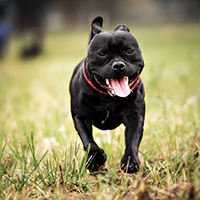
English staffordshire bull terrier running in road
I never thought I’d be writing about this, but here I am—grappling with the reality of dog attacks, particularly those involving children. Recently, a young child was viciously attacked and is now in hospital, fighting to recover. The incident has reignited debates about pit bulls and whether they pose a unique danger. But is it really just pit bulls? Or is there something deeper at play?
The Pit Bull Debate: Fact vs. Fear
Pit bulls often find themselves at the centre of discussions about dog attacks. While statistics suggest they are disproportionately involved in serious incidents, it’s important to separate fact from fear.
Many pit bulls are loving, loyal companions. The issue isn’t necessarily the breed itself—it’s how they’re raised, trained, and treated. Mismanagement, neglect, and abuse are major factors in dog aggression, and pit bulls are unfortunately one of the most frequently mistreated breeds.
That being said, pit bulls are incredibly powerful dogs and, when they do attack, they cause serious damage. They also have a high pain threshold, meaning they may be less likely to back down in a confrontation. Their strength and determination make them formidable animals, which is why responsible ownership and proper training are absolutely essential.
What About Other Dogs?
While pit bulls often take the blame, they aren’t the only breed involved in attacks. Several other dog breeds have been recorded in severe incidents, but their involvement tends to be overlooked. Even smaller breeds, such as Jack Russells, can be aggressive, but their bites rarely cause life-threatening injuries.
The reality is that any dog—regardless of breed—can become dangerous if neglected, abused, or improperly trained. Dogs that are isolated, unsocialised, or encouraged to be aggressive are far more likely to attack.
Preventing Dog Attacks: A Community Effort
So, what can be done to prevent these tragic incidents? Experts suggest several key strategies:
- Responsible Ownership: Owners must ensure their dogs are properly trained, socialised, and provided with the right care.
- Public Education: Teaching children and adults how to interact safely with dogs can significantly reduce the risk of attacks.
- Stronger Regulations: Laws that require registration, microchipping, and control of free-roaming dogs can help prevent dangerous situations.
- Emergency Preparedness: Knowing how to handle an aggressive dog can save lives. Experts recommend staying calm, avoiding direct eye contact, and using objects to create a barrier.
Moving Forward
The recent attack on the child is heartbreaking, and my thoughts are with the family. But instead of blaming an entire breed, we need to focus on responsible ownership, education, and prevention. Dogs are not inherently dangerous—humans play a significant role in shaping their behaviour.
It’s time to move beyond fear and stigma and work towards a future where both people and dogs can coexist safely.


