
By Celia Forsyth – for Bob and Bindie and every dog out there joining a dog training school.
Modern dog training should never involve fear, force, intimidation, or outdated techniques. As someone who has worked in pet care, welfare, and education, I believe training should be humane, evidence-based, and focused on helping both dogs and their guardians learn well together.
What I Witnessed
When I attended this dog training school with my two puppies, I was deeply disturbed by what I saw. Watching a boxer being dragged across the field on a choke chain was unacceptable, and seeing two Labradors repeatedly pushed over threshold with no regard for their stress levels or emotional wellbeing was just as concerning. Shouting commands at dogs is not training, and it was painfully clear that some of the trainers lacked the skill to guide either the dogs or their handlers in a calm, effective, ethical way.
What struck me most was how little meaningful support was given to owners who genuinely needed help. A gentleman with a German Shepherd was clearly struggling to teach basic behaviours like sit and recall on leash, yet no one stepped in with the kind of practical coaching or modern training knowledge that should be expected from professionals. Dogs should never be set up to fail, and neither should their people.
Why This Matters to Me
I actually attended this same trainers’ course 15 years ago, and even then I was appalled by the use of choke collars and harsh methods. To return all these years later and find that the same outdated practices are still being used was profoundly disappointing. We know far more now about canine behaviour, body language, thresholds, learning theory, and humane training methodology than we did then, and there is no excuse for not evolving.
Methods such as spraying water at puppies, forcing young dogs into heelwork before teaching the handler how to build the behaviour, or using pain and pressure instead of clarity and reinforcement are not old-school wisdom. They are signs of poor education and inadequate professional standards. Schools that continue to train this way undermine the credibility of the entire dog training profession.
Our Responsibility as the Public
I also believe the public has a responsibility here. We cannot say we care about dogs and then continue to support training environments where dogs are frightened, physically corrected, or emotionally overwhelmed. Guardians need to know that they are allowed to question methods, to leave classes that feel wrong, and to expect far better from the people entrusted with their dogs.
Ethical, science-based training is not optional anymore. It is the minimum standard. If a school cannot demonstrate an understanding of canine body language, thresholds, timing, and humane teaching methods, then it should not be normalised or excused. The public has enormous power in what it chooses to tolerate, support, and recommend.
Why Education Matters
This is exactly why I am so passionate about education in the pet care space. Better training starts with better trainer education. If trainers are not being taught modern, skilled, ethical methodologies, then dogs and their guardians pay the price.
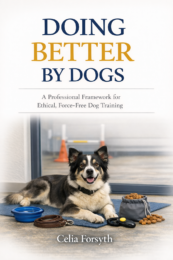
That belief is also deeply connected to my own work and writing. In my book Raising Resilient Puppies, I focus on giving puppies the best possible emotional and behavioural foundations so they can grow into confident, secure, capable dogs. In Do Better by Dogs, I challenge the standards we have accepted for far too long and advocate for kinder, more informed, more ethical ways of living and working with dogs. Both books come from the same conviction: we can, and must, do better for dogs.
Why Pet Sense College Cares So Deeply
That is also why Pet Sense College is so passionate about ethical dog training. We believe that modern education should equip trainers and guardians with the knowledge, skills, and ethical framework to work with dogs in ways that protect welfare, build trust, and create lasting learning outcomes. For me, this is not simply about training techniques; it is about responsibility, compassion, and professional integrity.
I reluctantly joined this school because I could not find a suitable alternative in the Vaal Triangle and hoped things would have improved over time. Sadly, I was mistaken. But the experience only strengthened my belief that humane, updated, science-based dog training must become the norm, not the exception. That is the standard I stand for, the standard I write about in Raising Resilient Puppies and Doing Better by Dogs, and the reason I remain so committed to ethical education through Pet Sense College.

Call to Action
If we want a better future for dogs, we have to expect better from the people who train them. We must support ethical schools, challenge outdated practices, and keep educating ourselves so that kindness, competence, and modern methodology become the standard across the profession.
At Pet Sense College, that commitment sits at the heart of everything we do. Through education, advocacy, and a deep respect for dogs as sentient beings, we are working to raise the standard of dog training for both professionals and the public.


